
Cancer Prevention
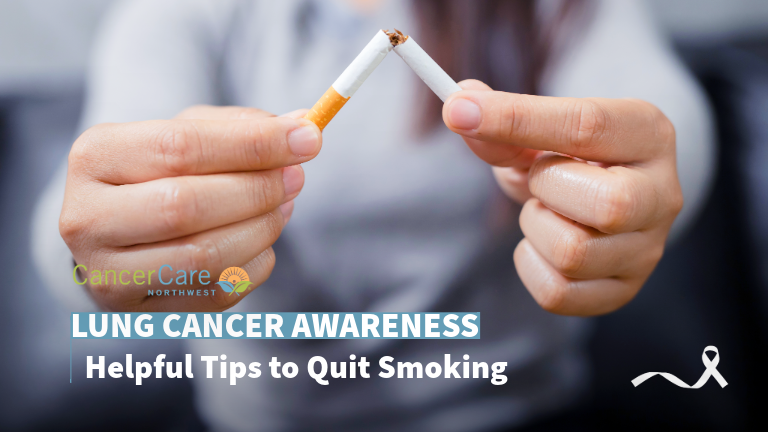
Tips to Quit Smoking
November is Lung Cancer Awareness Month, making it an important time to raise awareness about lung cancer prevention and the benefits of quitting smoking. Quitting is one of the most important steps you can take to protect your health and reduce your risk of cancer. However, breaking nicotine dependence can be challenging, and everyone's journey is different. Whether you're preparing to quit for the first time or trying again after a previous attempt, there are strategies and resources that can help.
At Cancer Care Northwest (CCNW), we believe that knowledge and support can make a difference. These tips can help you prepare for quitting, manage cravings and take steps toward a smoke-free future.
Helpful tips to quit smoking:
- Know Your Why
- Make a list of the reasons you want to be smoke-free. Keep it in a place where you can reference it especially during times of cravings or setbacks.
- Think about how quitting smoking may impact your health, lifestyle or family life.
- Make a Plan
- Set a quit date and work up to that date.
- Remove smoking products (such as cigarettes, lighters, ashtrays) from your home, car and workspace.
- Talk to your family, friends, and healthcare provider about your plan.
- Identify Your Triggers
- Identify activities that you have associated with tobacco use (i.e. drinking coffee, driving, talking on the phone) or strong emotions (anxiety, stress, anger, etc.).
- Plan an alternative activity for each trigger.
- Consider avoiding certain routines temporarily while you develop new habits.
- Smoking cessation counselors and quit lines are available to help identify and manage triggers.
- Learn How to Manage Cravings
Strategies that may help include:
- Stay active
- Seek support from friends and family
- Practice relaxation, such as deep breathing
- Consider smoking cessation counseling
- Explore medications options: Nicotine replacement therapy, including patches, gum, lozenges, inhalers and nasal sprays, can help reduce cravings and withdrawal symptoms. Prescription medications, such as bupropion or varenicline, may also help. Talk with your healthcare provider about which options may be appropriate for you.
Quitting smoking can be challenging, but you don't have to do it alone. Support, counseling and medication can help you manage cravings and work toward lasting change.
For additional help, explore our recommended smoking cessation resources to find local and national programs.
At Cancer Care Northwest, we're committed to providing comprehensive, compassionate cancer care and helping our community access trusted health information. No matter where you are in your journey, taking steps toward a smoke-free life is a meaningful investment in your health.