Print Page

Vicki Jones

Her Best Decade Yet


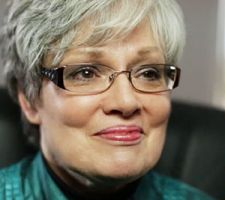
In 2003, Vicki Jones turned 50 joyously. Feeling the best she ever had, she anticipated that her 50’s would be her best decade yet. Maintaining a healthy lifestyle, surrounding herself with the people she loved, traveling for her new job and attending local plays and concerts were at the top of her to do list. True to her promise, Vicki began actively pursuing her goals by living each day to its fullest and scheduling annual health check-ups. 
 
In June 2004, during Vicki’s annual check-up, a routine blood test revealed elevated levels of protein in her blood stream. Attributing the abnormal levels to two years of low-carbohydrate dieting, Vicki left the next day on a business trip unconcerned about the pending results. A few weeks later, her doctor insisted she come back for further tests. Then Vicki was referred to Dr. Hakan Kaya, a hematologist and medical oncologist at Cancer Care Northwest.  
 
“It wasn’t until I got to the parking lot and saw the Cancer Care Northwest sign that it finally hit me. This wasn’t a normal appointment; I was being tested for cancer,” Vicki said.  Dr. Kaya ordered a bone marrow biopsy.

About the Bone Marrow Biopsy
A bone marrow biopsy is performed to evaluate the presence of disease in bone marrow. During the procedure, a biopsy needle is inserted into the bone and then moved through the bone in a twisting motion. When the needle passes through the top layer of bone, a syringe is used to pull a liquid sample of the bone marrow cells through the needle. The needle is then moved further into the marrow to collect a second sample of marrow called a core biopsy. The core biopsy is a small, solid piece of bone marrow. The needle is then removed and the marrow can be examined more closely.  

The Diagnosis
The results of the biopsy were overwhelming. Vicki and her husband, Dan, listened quietly as Dr. Kaya explained her diagnosis.

“You have Multiple Myeloma, a cancer of plasma blood cells present in bone marrow.” Dr. Kaya stated. 

Vicki had never heard of the disease, but Dr. Kaya provided a thorough explanation.  Plasma cells normally make proteins, called antibodies, to help fight infections.  In Multiple Myeloma, a group of abnormal plasma cells, or myeloma cells, multiplies, elevating the number of plasma cells to a higher-than-normal level. Health problems caused by Multiple Myeloma can severely affect bones, the immune system, kidneys and red blood cell count. The disease is not curable but is treatable.

Vicki and Dan returned home and immediately began researching to find out more information and rule out uncertainties about the disease. They learned that even with treatment, Myeloma patients may only live an average of five years after their diagnosis (a statistic that has improved since then). Leaving the disease untreated, Dr. Kaya estimated Vicki might live one year. Reminding herself of the commitment to her health, Vicki was determined to fight her cancer with the support of her family and friends. 

“It was so strange,” Vicki said, “because I felt great! To fight the cancer, I would need chemo, which would surely have side effects.  The cancer hadn’t made me sick but the treatments probably would.  It’s hard when you feel good to make a decision like that.” With remission as the goal, Vicki began her first round of chemotherapy within a few weeks. 
 
“Chemotherapy wasn’t as painful as it was scary,” Vicki admitted. “Losing my hair was challenging because it was the first visual sign that marked me as cancer patient to the rest of the world.” 

Despite her fears, Vicki accepted the reality of her disease and diligently continued with her treatment regimen. The chemotherapy appeared to be working well until extensive pulmonary emboli, blood clots entering the main artery of her lung, forced her to stop chemotherapy treatments. Fortunately, the blood clots were successfully thinned with medical attention and her cancer went into remission without the completion of chemotherapy.
 
Vicki’s partial remission lasted for two years before the Multiple Myeloma had to be treated again, but she was better prepared to fight it this time.  Instead of another round of chemotherapy, Dr. Kaya, the region's only physician with formal fellowship training in stem cell transplantations, encouraged Vicki to consider an autologous stem cell transplant. Stem cell transplants are often an effective treatment for advanced Multiple Myeloma patients and Vicki was a prime candidate. She trusted Dr. Kaya’s recommendation and decided to undergo the procedure.

About the Autologous Stem Cell Transplant
In an autologous stem cell transplant, healthy stem cells are removed from the patient’s bone marrow and stored. The patient receives an extremely high dose of chemotherapy to destroy the cancerous cells. After the chemotherapy, the patient’s stem cells are re-infused into the body replacing the destroyed bone marrow and improving the body’s ability to produce healthy blood cells. The goal of the transplant is to enter into a longer lasting remission. 

“I felt so lucky to be a candidate for the procedure; I was the poster girl for a stem cell transplant,” Vicki said. In February 2007, Vicki completed the transplant which went smoothly. She recovered for two weeks in the hospital before returning home.

Remission and Reoccurrence
Multiple Myeloma is considered to be an incurable cancer and often reoccurs in patients.  Because of this, Multiple Myeloma patients will often go through many rounds of cancer treatment, including multiple chemotherapy treatments and transplant procedures. Vicki’s cancer levels climbed again and in July 2008 she began another round of chemotherapy with a new drug. The chemotherapy sent her cancer into remission for another 16 months before she needed further treatment in December 2009. 

“Everyday I wake up, even when I’m in remission, and remind myself that I have cancer. Most of the time it doesn’t seem real, but I don’t want to forget that I have this disease. Forgetting and then remembering again is too painful.”
 
Today, Vicki is undergoing her third round of chemotherapy. “I am still surprised I feel so good. Cancer has been the challenge of a lifetime, but chemo hasn’t been as bad I thought. I guess I’m one of the lucky ones,” she said.  Her blood cell counts are close to normal levels and she predicts that she will be in remission soon.

Taking life one day at a time
“I have come to realize that Multiple Myeloma is a series of small events. The diagnosis is life-changing at first, but now I realize that this particular cancer is a day-by-day kind of disease,” she explained.  
 
With her quiet yet courageous mantra, Vicki has accepted Multiple Myeloma as a part of her life. “Undergoing chemo treatments is just one part of my day. I do many other rewarding activities to fill up the rest.” 

Vicki is currently an accountant who works over the internet, a wife to a loving husband and a sister, daughter, niece and aunt to a wonderful, close family.  She is co-leader of a Multiple Myeloma Support Group which her husband started in the Spokane area in 2006, and a volunteer for CCNW’s annual stem cell picnic planning committee. Vicki is also working to pass legislation in Washington to provide parity for coverage of oral and I.V. cancer drug treatments. Vicki and Dr. Kaya have ongoing discussions about someday writing a book together.

“I don’t have a bucket list, because I want to do it all. Everything in the world is on my list,” she said. “I have already had major experiences in this decade, but who knows, maybe my 60’s will be my best decade yet!” 
 

© 2009 Cancer Care Northwest All Rights Reserved